BESS performance management in the Southwest
November 26, 2026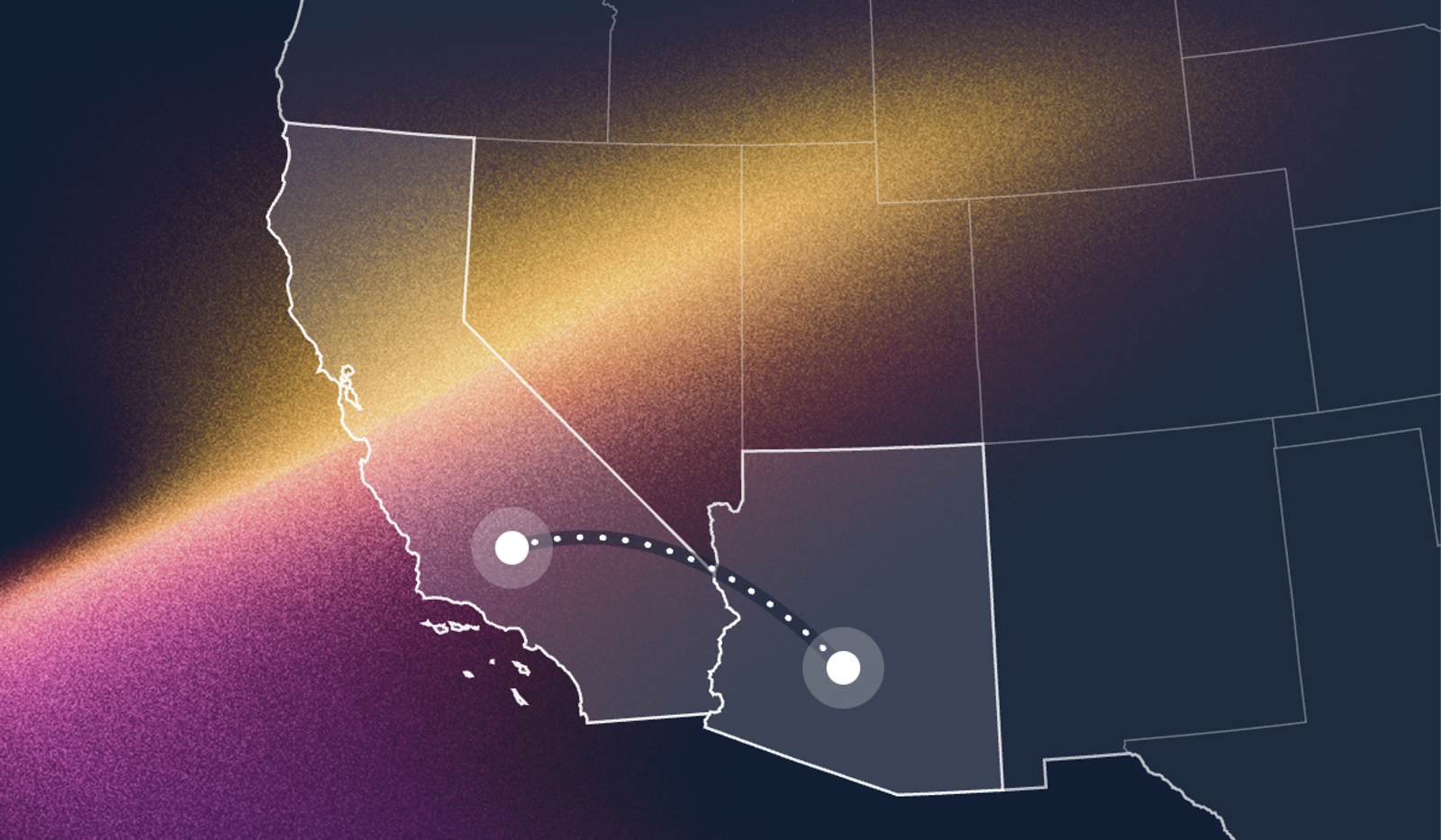
Battery energy storage systems (BESS) are going up across California and the Southwest faster than anyone is planning to manage how they perform. Our team spent last week on Enurgen's first BESS roadshow, from Phoenix to Kern County, California, and the biggest takeaway wasn't a new technology: it’s that performance engineers are racing to keep up.
How big is the BESS build-out in California and the Southwest?
Big enough that storage is now core grid infrastructure. California's battery fleet has passed 21,000 MW, and on August 1 the state's grid operator saw more than 13,000 MW discharge at once, about a third of demand. Kern County is where the scale is easiest to see. Avantus's Buttonbush 1A and 1B will pair 800 MW of solar with 3.2 GWh of storage, with construction expected in 2027 and operations in 2029. AES's Bellefield project, near Mojave and California City, will combine 1 GW of solar with 1 GW of four-hour battery storage and is expected to be the largest solar-plus-storage facility in the US. Kern County's planning department told the summit it has approved 31 accessory battery storage facilities and has started processing standalone storage. Much of the wider Southwest pipeline is scoped for 2028–2029.
Policy is shifting under these projects too. California's solar property tax exclusion ends this year, the federal investment tax credit rolls off around 2029 or 2030, and panelists repeatedly asked for "stability and predictability" in permitting and policy.
Beyond lithium-ion
Lithium-ion has been the main player for years, but the summit was already looking past it. Hydrostor presented its Willow Rock Energy Storage Center, a 500 MW, eight-hour (4,000 MWh) compressed-air project in Kern County that it said is now in construction after final approval from the California Energy Commission. Hydrostor expects a 50-year life for these facilities and contrasts that with batteries, which typically need replacing every 10 to 15 years.
Elsewhere, attendees talked about sodium-ion for hot and cold climates, portable batteries that charge off-peak and fast-charge trucks and aircraft, and distributed assets pooled to help data centers get more out of limited grid connections. Different technologies are filling different niches, and each one brings its own performance questions.
Heat is a performance problem
The sharpest technical exchange came when someone asked about battery degradation in extreme heat. An operator with Southwest battery sites said heat is an issue, especially in summer: available power throttles back, HVAC compressors underperform, and if the deviation in site trends goes unnoticed, systems can trip off and a whole block is lost. Ideas on the table included extra insulation, dedicated heat pump circuits, painted containers, and sodium-ion. Safety is moving too. Panelists pointed to a new UL large-scale fire test with pass/fail criteria, NFPA spacing rules that account for site-specific wind speed, and equipment standards calling for active ventilation and gas monitoring. Better design helps, but it doesn't replace watching how each site actually performs.
Load, affordability and who owns the assets
Two years ago the conversation was about sustainability; now it is affordability and speed. Hydrostor's panelist estimated AI-related investment at $2 to $5 trillion over 20 years, and the electrical infrastructure to serve it at $3 to $6 trillion. In Phoenix, load growth meets heat and water constraints, and Arizona's major utilities are vertically integrated: they handle procurement and asset management themselves and outsource only construction. Either way, someone has to own the performance of the batteries that all this demand depends on.
Performance can’t wait for commissioning
BESS has scaled faster than anyone’s track record of operating it. Few teams have years of data on how these assets age, degrade and fail in the field, and performance engineering has to keep pace with rapidly changing technologies, markets and applications. Most of the people we met on the road were developers and community-engagement teams, and a common plan was to work out performance management after the build. “We’ve got two years for that part.”
That is a risky bet. New technologies have a history of falling short of idealistic plans, and the contracts, accountability and monitoring that protect performance are far easier to set up before commissioning than after.
Averages also hide problems. A site can meet its contract availability on paper while a few blocks underneath it quietly underperform. One U.S. owner of large solar-plus-storage plants caught a single drifting unit while the site average still looked healthy, early enough to pursue the repair under warranty.
Enurgen builds the operating system owners use to run utility-scale battery storage and solar, from raw SCADA data to the control room. That is the gap we work in. For a look at the same pattern on the solar side, see our guide to the top 3 recoverable losses in utility-scale solar.
Start early
If you're planning a BESS project for 2028–2029, settle these before the first summer, not after:
- Performance expectations written into contracts, with clear accountability for who owns the numbers.
- Data access and monitoring in place from day one, so site-level trends are visible.
- A plan for heat, including how throttling and cooling underperformance will be detected.
- A baseline from commissioning, so later deviations can be measured against it.
Want to see what this looks like on a site like yours? Ask the Enurgen team for a 30-minute walkthrough.