Technical PaperSolar Energy / SUNLAB / University of Ottawa
Optimal GCRs for HSAT, Fixed-tilt, and Vertical PV Systems for Latitudes up to 75°N
 Get the download
Abstract
Traditional PV array layout guidelines were designed for monofacial, fixed-tilt systems at low-to-moderate latitudes. Now that the market has progressed toward bifacial technologies, higher latitudes, and land-constrained areas, updated guidelines are more important than ever.
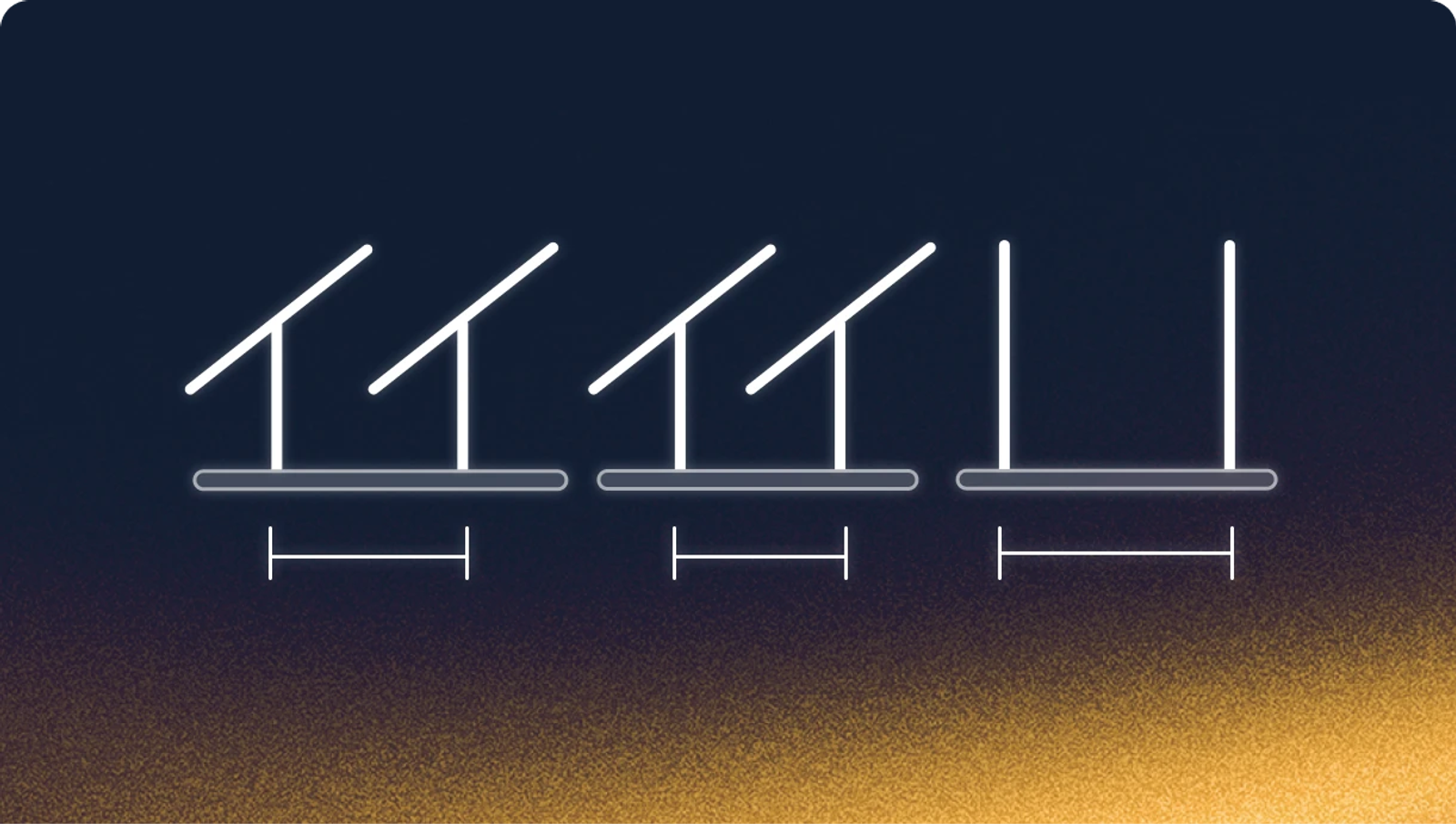
Here is a summary of key results from an analysis of ground coverage ratios (GCRs) for fixed-tilt, HSAT, and vertical arrays across 31 North American locations ranging from 17°N to 75°N.
- Fixed-tilt systems span a wide GCR range of 0.15–0.68 compared to HSAT systems (0.17–0.32) and vertical systems (0.11–0.16).
- Latitude is a stronger driver of inter-row energy yield shading losses than diffuse fraction. Higher latitude systems require lower GCR to maintain a specific inter-row loss.
- Bifacial modules require GCRs approximately 0.03 lower than monofacial modules.
For more details, download the paper.
Erin M. Tonita, Annie C.J. Russell, Christopher E. Valdivia, Karin Hinzer
Optimal GCRs for HSAT, Fixed-tilt, and Vertical PV Systems for Latitudes up to 75°N
Get the download